Carnival in Lincoln, Argentina
Carnival is the most traditional holiday in Lincoln, Buenos Aires Province. Its main attraction is the parade of handmade floats, masks, mini floats and “cabezudos” (big-headed figures of famous people), which captivate the public with their craftsmanship and originality. Street performers, bands of street musicians and samba schools cheer the spectators every night.
Every year, Lincoln’s national Handmade Carnival surprises visitors with spectacular nights of pure art, dance and dazzle.
As a Pampa Spanish student, you can also take part in Carnival activities, like making a carnival mask or dancing to the music and choreography of our carnival.


The Argentine Asado: More Than a Barbecue
Asado is the Argentine technique for cooking cuts of meat (usually beef), sausages and offal on a barbecue. The meat is cooked without any embellishments, very slowly over coals, until it melts in your mouth and cuts like butter.
The Argentine asado is much more than a meal: it is an important part of Argentine social life. It is the default way to celebrate birthdays, special events and holidays, or simply an excuse to get together with family or friends on a Saturday night or Sunday lunch. Asados tend to be long, drawn-out affairs with plenty of food, drink and conversation. If you’re invited to an Argentine asado, prepare yourself for a non-stop parade of different cuts of meat, offal and sausages.


Dulce de Leche: Argentina’s Milk Jam
Dulce de leche, or milk jam, is a creamy, smooth, spreadable sweet with a thick consistency and an oversweet chestnut color. It is made by cooking milk and sugar over a slow fire until it reaches a uniform color and a sweet milk flavor.
Mate: The Argentine Tradition of Sharing
Mate is Argentina’s traditional drink, an infusion similar to herbal tea, and a symbol of friendship shared in every home. It is drunk from a gourd with a metal straw (bombilla), and passed from person to person.
In Lincoln, you will see people sharing mate everywhere: at home, at work and in the park. For Spanish students, it is one of the best ways to start a conversation with your host family and practice everyday Spanish in a relaxed, real setting.
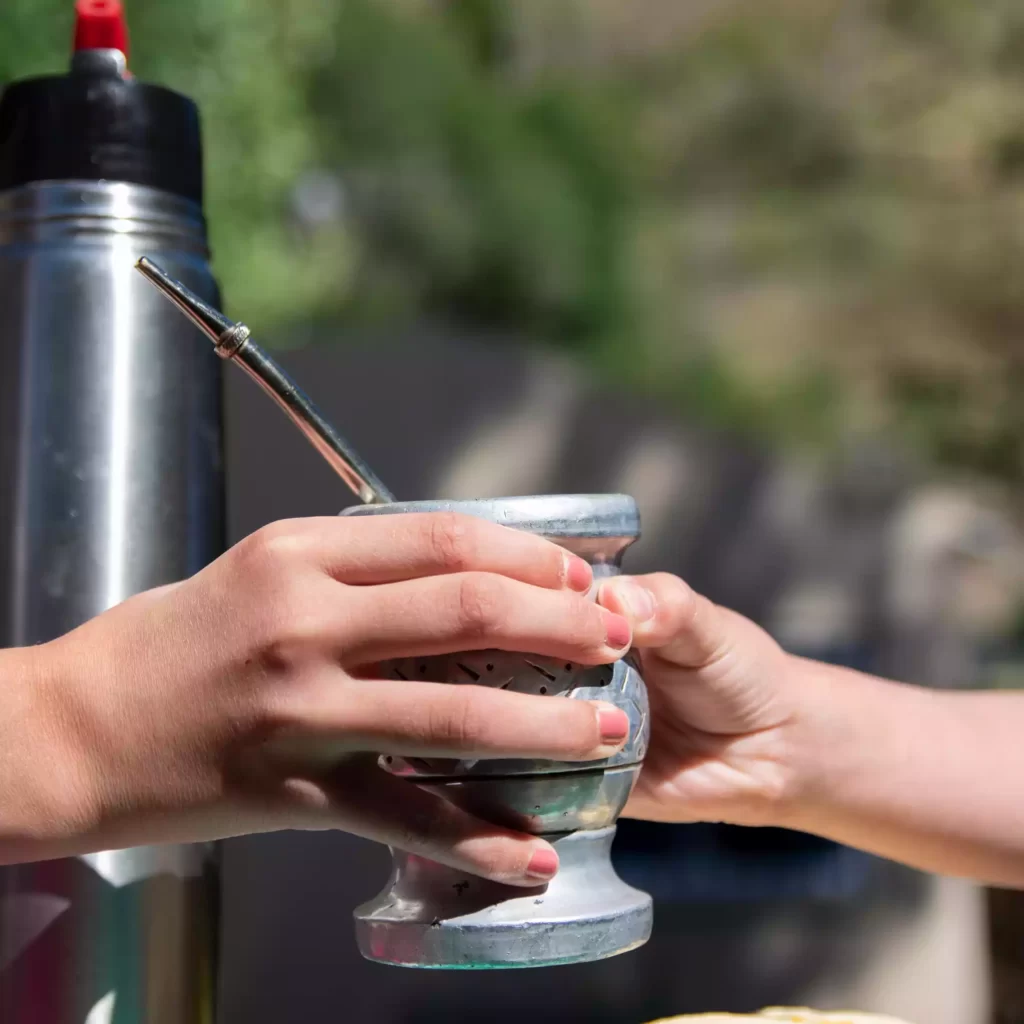
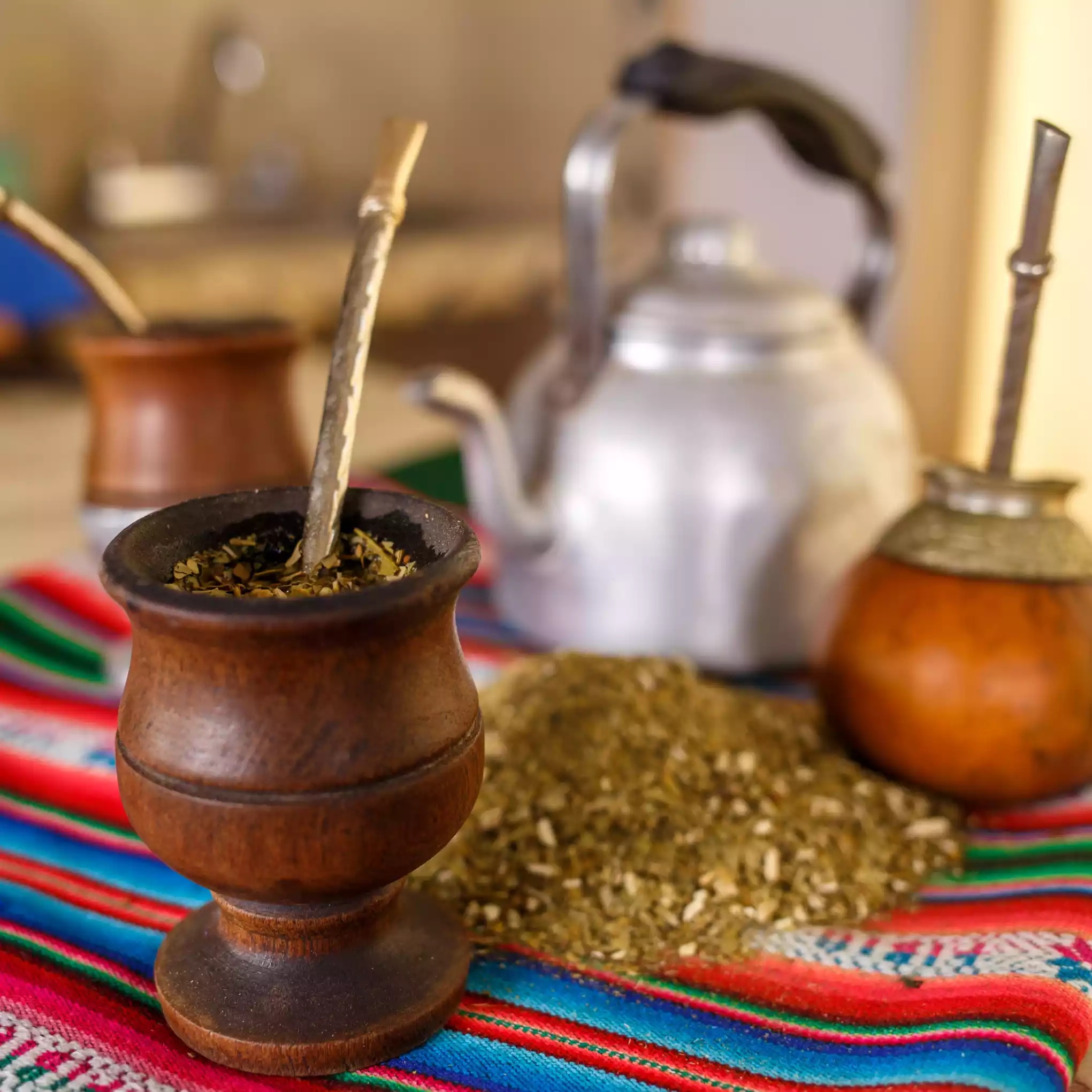
How it works: the gourd is packed with yerba mate and filled with hot (never boiling) water. The person who prepares it, the cebador, pours the water, drinks the first mate and then passes it around. When you finish, you hand the gourd back and the cebador refills it for the next person.
A few rules of the mate circle:
- Don’t say “thank you” unless you want to stop. It means you don’t want more.
- Don’t stir the straw. It is considered rude to the one who prepared it.
- Mate is meant to be shared, so it means friendship and reunion.
Sharing mate is a perfect example of Slow Travel in Argentina: no hurry, good company and real conversation.
Argentine Wine: Malbec and Mendoza
Argentina is one of the world’s great wine producers, famous for its Malbec, a grape that thrives in the sunny, dry climate of Mendoza. Argentine wines are known for their deep color, structure and rich fruit flavors, with smooth tannins.
Sharing a glass of wine at a family dinner is part of everyday life in Argentina. For Spanish students, it is a natural moment to chat, learn new vocabulary and enjoy the local culture with your host family.


Empanadas: Argentina’s Favorite Savory Pie
Empanadas are Argentina’s most popular savory pastry: a baked or fried turnover filled with seasoned ingredients. The classic filling is minced beef with onion, egg and sometimes diced olives, but every region and every family has its own recipe.
Empanadas are a staple of family gatherings and casual dinners, so they are a delicious way to practice Spanish while ordering, sharing and comparing recipes with local people.
The Argentine Countryside: Slow Travel in the Pampa
Lincoln, in the heart of the Argentine Pampa in Buenos Aires Province, is a peaceful rural destination of flat plains, small towns and old railway stations. Away from the noise of big cities, time seems to slow down, which makes it ideal for Spanish immersion and Slow Travel in Argentina.
Here you can walk quiet, tree-lined streets, visit the traditional pulperías (country pubs) where locals enjoy vermouth with cheese and salami, and spend time by the lagoons, where horses and countryside life are part of the landscape.
Studying Spanish in Lincoln means living the language every day, with a host family and local friends, in an authentic rural setting. It is an unforgettable way to discover Argentina from the inside.